Community Support Centre
Salford, UK
We support members of our community who are facing multiple challenges with the vision of improving their mental health and well-being making them strong together as a community through a weekly session where we Signposts, counseling, having a group support, workshops and training sessions for health and well-being.
We will kindly appreciate any support to alleviate the stress on our community members and help them build their self confidence and great social connections, encourage them to have a healthy lifestyle and be more happier.
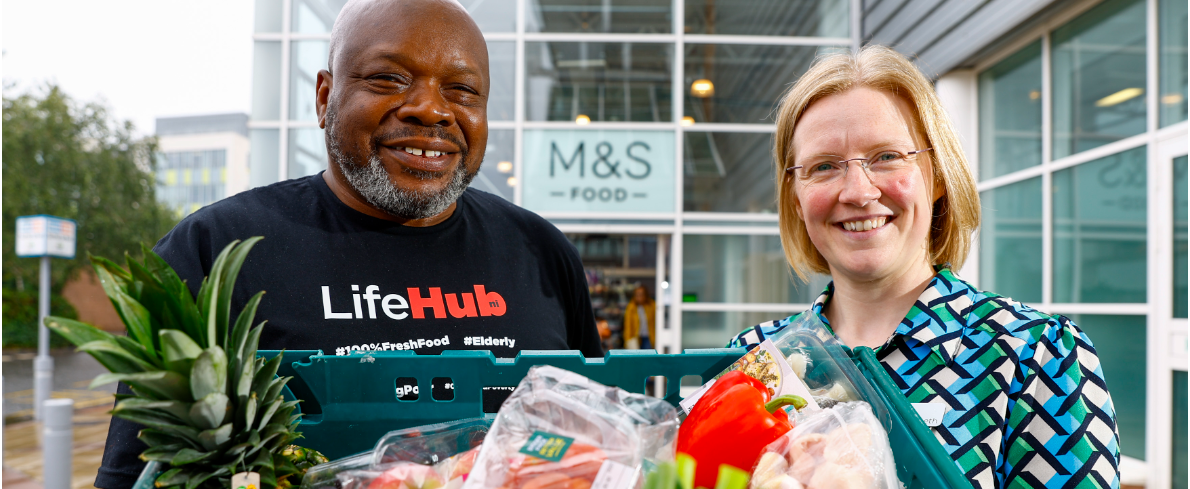
At Community Support Centre , We collect surplus food from local businesses and redistribute it to people facing food insecurity in our community, we work with shelters, food banks and community centers to ensure the food reaches those who need it most. Our goal is to reduce food waste while providing nutritious meals to individuals and families, helping to alleviate hunger and improve the overall wellbeing of those we support.
What we've received
Meals111,778
Non-food (tonnes)2.83
Volunteering (hrs)Volunteering (hours)12
Money£15,650
Food Rescue Group, Manchester
Manchester, UK
The Food Rescue Group at Manchester mobilises an active and committed network of student volunteers and community partners from across the city. Led by students from local universities, the group turns climate concern into practical action by addressing food waste at a grassroots level.
Food waste is a major driver of climate change. Valuable resources such as land, water, and energy are consumed to produce food, yet large quantities are discarded and sent to landfill, where they generate methane, a greenhouse gas far more potent than carbon dioxide. By rescuing surplus food and redirecting it to people who need it, the group reduces environmental harm while supporting families and individuals across Manchester.
The initiative works in partnership with local producers, retailers, and food businesses to ensure surplus food is used rather than wasted. These partnerships reduce disposal costs for businesses while delivering measurable environmental benefits. In Manchester, operations are powered by students from the University of Manchester, Manchester Metropolitan University, the University of Salford, the University of Bolton, and the Royal Northern College of Music, alongside members of the Hindu community and other local groups. Together, they demonstrate how student-led action can create meaningful climate impact.
Pickup and distribution in Manchester are coordinated by Haojun Shuai and Ramanujam Nagarajan, who manage volunteer schedules, oversee collections, and ensure rescued food is delivered promptly and safely. Their leadership supports efficient operations while keeping the group’s work firmly rooted in student engagement and community values.
Food is collected and redistributed within 15 minutes of pickup, ensuring freshness and removing the need for storage facilities. All items are carefully inspected to meet food safety standards, and any unsuitable food is disposed of responsibly to minimise environmental impact. Coordination is managed through a dedicated WhatsApp group, providing real-time updates on collection times, locations, and quantities.
Through this work, the Food Rescue Group at Manchester diverts significant volumes of food from landfill, reduces greenhouse gas emissions, conserves valuable resources, and strengthens community connections. As the group continues to grow, it remains committed to showing how student-led climate action can drive real change, one meal, one volunteer, and one community at a time.
What we've received
Meals205,454
Non-food (tonnes)0.77
The Sharing Table
Manchester, UK
The project is an environmentally focused food surplus redistribution initiative operating across South Manchester. The project's primary purpose is to prevent food waste by redistributing good-quality surplus food that would otherwise go to landfill, delivering clear environmental benefits while also supporting good-quality surplus food that would otherwise go to landfill, delivering clear environmental benefits while also supporting the wider community during the ongoing cost-of-living crisis.
The initiative operates on an open and inclusive basis, with no referral requirements, assessments or eligibility criteria. Food is shared openly to ensure surplus is used efficiently and responsibly, regardless of background or circumstances. This is non-discriminatory approach allows the project to remain focused on waste prevention while offering practical support to anyone seeking to reduce food waste and household food costs.
The project is supported by volunteers from all walks of life, including professionals and warm-hearted local parents, who work together to collect, sort and redistribute surplus food. This diverse volunteer base reflects the community-led nature of the initiative and supports its ongoing operation.
All food is redistributed free of charge. The project does not charge for its services and does not operate as a commercial or profit-making model.
What we've received
Meals2,635
Non-food (tonnes)0.15